"Do you make swim caps?" is a question factories hear constantly — and the follow-up matters more than the question itself. Silicone swim caps and fabric swim caps serve completely different customers. A buyer who needs one will not substitute the other, so choosing the wrong type means developing a product your market never wanted.
This guide compares the two from a sourcing and retail point of view: what each cap is for, how they differ in construction and cost, and how to decide which one belongs in your range.
What each type is actually for
Silicone swim caps are smooth, stretchy caps made from 100% silicone. They grip the head tightly, keep hair dry-ish and reduce drag. The main buyers are junior swim teams, training squads and racing swimmers — anyone for whom speed and hair protection in the pool matter.
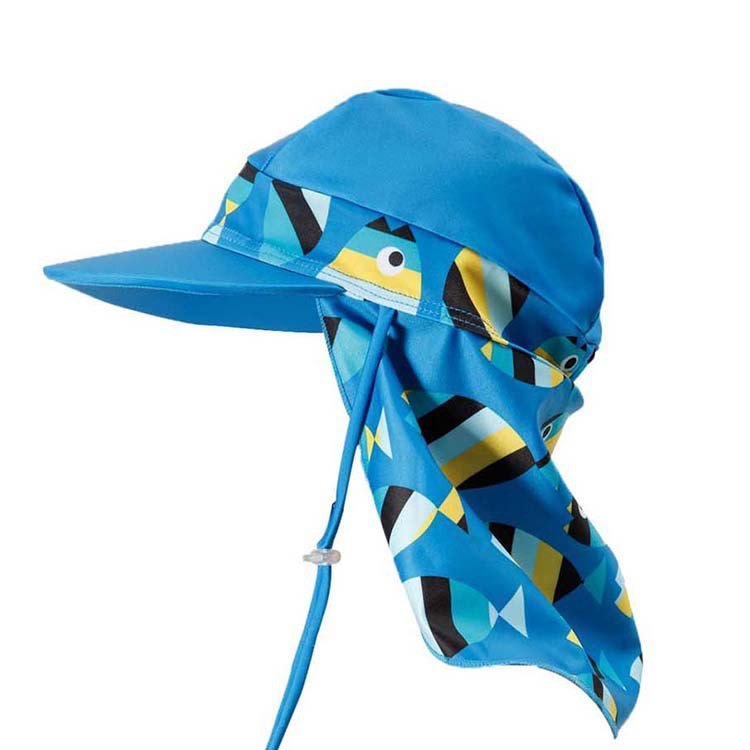
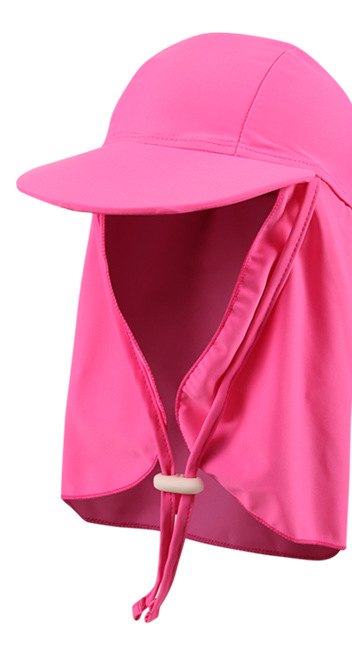
Fabric swim caps are sewn from swimwear fabric — usually nylon/spandex or polyester/spandex, often UPF 50+ rated. They are loose, comfortable and easy for a child to put on alone. The most popular style for children today is the legionnaire cap (also called a sun-flap or cape cap): a fabric cap with a brim and a flap that covers the back of the neck. The main buyers are parents, swim schools, beach resorts and retail brands selling sun protection — the largest part of the kids' cap market by far.
Silicone vs fabric: head-to-head
- Fit and feel. Silicone caps fit snugly and press hair flat; children often find them uncomfortable and need help putting them on. Fabric caps are roomy and soft — a 4-year-old can pull one on without help, which is exactly what parents want.
- Sun protection. This is where fabric wins decisively. Silicone caps cover only the head. A legionnaire fabric cap protects the face, ears and back of the neck — the three areas where children burn first. With UPF 50+ rated fabric (we can provide the lab test report), the protection is a certified product feature, not a marketing phrase.
- Hair dryness and drag. Silicone wins here. It seals around the hairline and cuts water resistance. Fabric caps get wet through and create drag. For racing, silicone is the only serious choice.
- Sizing. Silicone caps are mostly one-size with a lot of stretch. Fabric caps need real size grading — head circumference differs far more between a 2-year-old and a 10-year-old than most buyers expect. Plan at least two to three sizes per style, and grade the neck flap length along with the crown.
- Customization. Fabric caps behave like swimwear: all-over sublimation prints, custom prints, piping and binding, private-label woven labels. Silicone caps are limited to solid colors, simple two-tone molding and printed logos. If your brand lives on prints, fabric is the canvas.
- Cost and MOQ. Fabric caps are sewn products, so they fit naturally into a swimwear factory's line — and into a combined MOQ with your other styles. Silicone caps are molded; the tooling is a separate cost and they usually come from silicone product factories, not garment factories. A swimwear factory offering silicone caps is typically trading them, not making them — ask who actually produces them.
Which market wants which?
Match the cap to the customer, not the other way around:
- Junior swim teams / swim schools with squad programs: silicone. Their coaches will tell you exactly that. Buy on thickness, chlorine resistance of the silicone, and whether the factory can hold logo position on the side panel consistently.
- Swim schools (learn-to-swim), daycares, resorts: fabric legionnaire caps. Comfort and sun protection are the pitch, and parents buy the set: cap plus rash guard is a natural bundle that raises your average order value.
- Retail brands, especially in sunny markets: fabric, and specifically prints. Australia, Southern Europe, the US Sun Belt and Latin America buy legionnaire caps with playful prints — dinosaurs, fish, florals — as part of a sun-safe collection. These caps pair with matching swimwear on the same shelf.
What to check before you order
- For fabric caps: Is the fabric genuinely UPF 50+ rated, with a lab report for the bulk fabric? Does the elastic in the edge binding hold after 20+ wash cycles? Is the neck flap long enough to cover a child's neck without the cap sliding forward?
- For silicone caps: What is the silicone thickness (thinner tears, thicker is hard for small heads)? How consistent is logo printing? Are the caps free of sharp mold-line edges that scratch children's skin?
- For both: Can the factory do your sizes, your prints and your labels at MOQ 100 per style/color? Do they test to your market's requirements?
How we handle swim caps at Naditas
Our swim cap line is built around fabric — legionnaire sun-flap caps in UPF 50+ rated nylon/spandex, with custom all-over prints, binding colors and woven labels, at MOQ 100 per style/color. We pair them with matching kids swimwear ranges and rash guards for brands building sun-safe collections.
Silicone caps we handle as a secondary option: we can source them for swim-school and team orders alongside your garment production, and we will tell you plainly which supplier makes them and what the mold costs — no mystery markups.
If you are unsure which type your market needs, send us your customer profile and target price. We reply with a formal quotation within 24 hours on working days, and honest advice when the answer is "neither" or "both."